
The political confrontation over police action during the Cockroach Janata Party (CJP) protest intensified on Tuesday as Leader of Opposition Rahul Gandhi led opposition MPs towards Prime Minister Narendra Modi’s official residence at 7, Lok Kalyan Marg, New Delhi.
The march followed clashes between Delhi Police and CJP supporters during the group’s “Chalo Sansad” march. The confrontation reportedly injured several protesters and triggered a fresh political debate over students’ concerns and the education system.
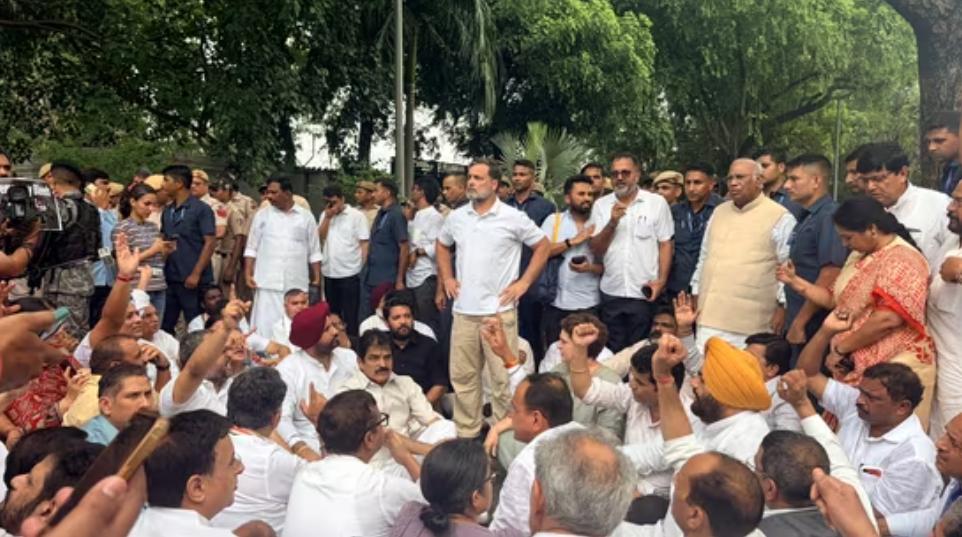
Rahul Gandhi Demands Answers From Government
Rahul Gandhi accused the Central Government of avoiding accountability over police action against students and protesters.
In a post on X, Gandhi said the Opposition marched towards the Prime Minister’s residence to demand answers over what he described as “brutalities” against young students. He also accused the government of preventing Parliament from discussing the issue.
Gandhi further demanded the resignation of Prime Minister Narendra Modi and Union Home Minister Amit Shah, arguing that the government’s handling of the situation had harmed the interests of India’s youth.
Congress Targets Education Minister
The Congress has also continued to demand the resignation of Union Education Minister Dharmendra Pradhan.
The party has linked its demand to concerns surrounding examination irregularities, the education system and the police response to the CJP protest.
Congress leaders argue that Parliament should discuss these issues and hold the government accountable for its handling of student concerns.
Opposition Pushes for Parliament Debate
The protest took place on the second day of the Monsoon Session of Parliament. Opposition parties continued to demand a detailed discussion on education-related concerns, examination irregularities and the police response to the CJP demonstration.
Opposition leaders accused the government of avoiding a meaningful debate on issues affecting students across the country.
Jitendra Singh Meets Rahul Gandhi
The confrontation appeared to ease slightly after Union Minister Jitendra Singh met Rahul Gandhi following the protest.
According to people familiar with the developments, Singh conveyed that the government could allow Parliament to discuss education-related issues and the students’ protest on Wednesday.
The reported willingness to hold a discussion came as opposition parties increased pressure on the government.
Congress Maintains Its Resignation Demands
Despite the possible breakthrough, Congress leaders have maintained their demands.
Party sources said the Opposition would continue seeking accountability for the police action against protesters. Congress leaders also plan to press their demand for the resignations of Prime Minister Narendra Modi, Education Minister Dharmendra Pradhan and Home Minister Amit Shah.
What Happened During the CJP March?
The latest political confrontation follows Monday’s clashes between Delhi Police and CJP supporters during the “Chalo Sansad” march.
Protesters attempted to move towards Parliament, but police stopped them. The confrontation reportedly injured several demonstrators.
Opposition parties quickly criticised the police response and accused the government of suppressing democratic protest instead of addressing students’ concerns.
Parliament Faces Continued Political Pressure
The CJP protest has also disrupted proceedings in Parliament, with opposition MPs repeatedly demanding a discussion on the issue.
The government initially resisted the demand but now appears more open to discussing education and student protests in the House. The shift could help both sides find a way forward if they agree on the terms of the debate.
CJP Protest Remains a Key Issue
The political battle over the CJP protest is likely to remain a major issue during the Monsoon Session.
The Opposition continues to demand accountability and ministerial resignations, while the government appears ready to consider a parliamentary discussion. The upcoming debate could shape the wider political discussion around education reforms, student rights and the government’s handling of public protests.