
Tension gripped New Delhi on Monday as the Cockroach Janta Party (CJP) organised a large protest march toward Parliament. Police stopped protesters near the high-security zone, triggering clashes between demonstrators and security personnel.
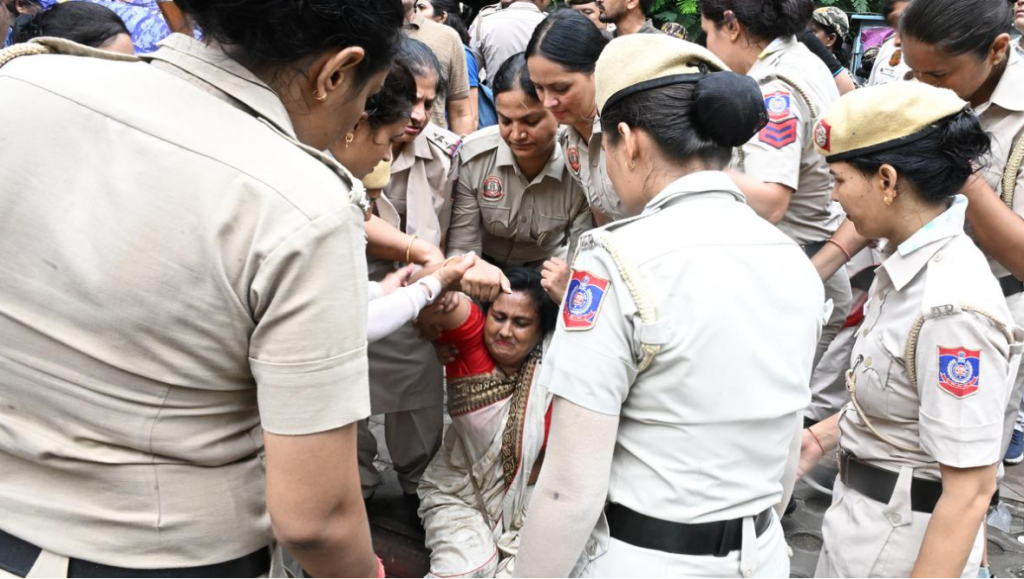
Police used tear gas and baton charges to disperse the crowd after some protesters attempted to cross barricades. Several demonstrators reportedly suffered minor injuries and received first aid at the protest site.
Protesters March Toward Parliament
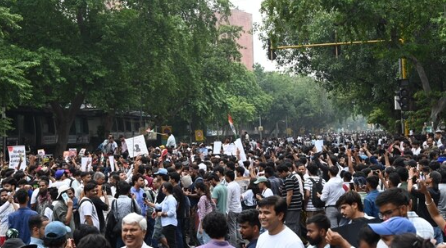
Hundreds of students, youth activists and CJP supporters joined the march from the Sansad Marg area.
The protesters demanded greater government accountability over education-related concerns and other public issues. As the crowd moved closer to Parliament, police placed barricades outside the Sansad Marg Police Station and along Raisina Road, around 200 metres from Parliament.
Police Use Tear Gas and Batons
The situation became tense when some protesters tried to move beyond the barricades.
Delhi Police responded with baton charges and tear gas shells to control and disperse the crowd. The confrontation briefly caused panic in the area.
Several protesters reportedly suffered minor injuries, while medical teams provided first aid to those who needed assistance.
Security Tightened Across Central Delhi
Earlier in the day, hundreds of students and youth activists gathered near Mandi House Metro Station before marching toward Jantar Mantar and Parliament.
Authorities deployed additional police personnel across central Delhi and strengthened security around Parliament and other sensitive locations.
Police maintained barricades to prevent protesters from entering the high-security zone.
Five Metro Stations Temporarily Closed
The Delhi Metro Rail Corporation (DMRC) temporarily closed five metro stations because of the security situation.
Authorities later reopened Central Secretariat and Rajiv Chowk stations and restored interchange facilities after reviewing the situation.
The temporary restrictions caused delays and inconvenience for commuters travelling through central Delhi.
CJP Representatives Agree to Government Talks
Amid the protest, the CJP said the Central Government had reached out to discuss the group’s demands.
CJP spokespersons Ashutosh Ranka and Sourav Das agreed to meet Union Health Minister J. P. Nadda to present their concerns.
The proposed meeting could provide an opportunity for the government and protest leaders to reduce tensions through dialogue.
Sonam Wangchuk Joins the Issue
Activist Sonam Wangchuk also drew attention to the protest. He said he would consider ending his hunger strike if the government accepted responsibility for shortcomings in the education system or if MPs agreed to raise the issue during the Monsoon Session.
Wangchuk also wrote to Safdarjung Hospital, expressing his intention to participate in the Parliament march despite continuing his fast.
Opposition Raises Education Concerns in Parliament
The protest coincided with the opening day of the Monsoon Session of Parliament.
Opposition parties demanded discussions on alleged question paper leaks and student protests. They argued that Parliament should address concerns surrounding the education system and examination security.
The government, meanwhile, called for constructive debate and the smooth functioning of both Houses.
Security Remains High in Delhi
Police maintained a high-security presence throughout the day. Officers continued to monitor key government buildings and sensitive locations across central Delhi.
Authorities also urged protesters to remain peaceful and follow legal procedures while exercising their democratic right to demonstrate.
CJP Protest Could Shape Further Political Debate
The Delhi CJP protest has brought education-related concerns and demands for government accountability back into the spotlight.
Talks between CJP representatives and the Centre could determine whether the agitation moves toward a peaceful resolution or continues in the coming days.
As Parliament’s Monsoon Session progresses, political parties, students and citizens will closely watch the government’s response and the outcome of negotiations with the protest leaders.