
The United States carried out another round of military strikes against Iran on Friday, marking the sixth consecutive night of attacks amid renewed tensions in West Asia. According to US officials, the latest operation was aimed at “further degrading Iranian military capabilities” as the conflict between the two countries continues to escalate.
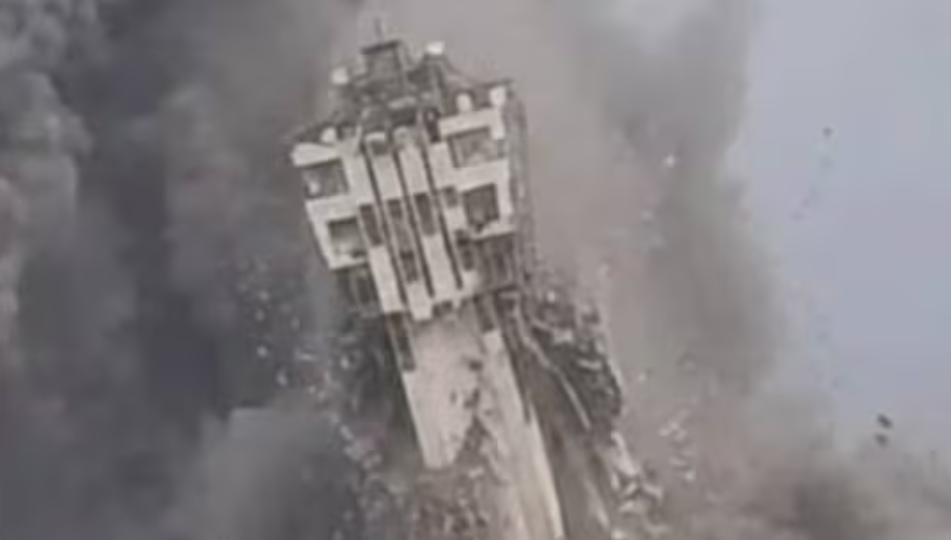
One of the most significant developments from the latest strikes was the reported damage to a surveillance tower at Iran’s Chabahar Port, located on the Gulf of Oman. Images circulating on social media appeared to show the tower collapsing, with clouds of dust and smoke rising from the site. The visuals quickly attracted global attention due to Chabahar’s strategic importance for regional trade and security.
US Defence Secretary Pete Hegseth later shared one of the images on social media, showing what appeared to be the damaged surveillance tower. While the United States has confirmed conducting strikes, Iranian authorities had not officially commented on the reported damage to the Chabahar facility at the time of writing. Independent verification of the images and the full extent of the damage remains pending.
Chabahar Port occupies a crucial position along the Gulf of Oman and is considered one of Iran’s most strategically significant maritime gateways. Beyond its military importance, the port serves as a major commercial hub that connects Iran with Afghanistan and Central Asia. It has also been developed with India’s support as part of a broader initiative to improve regional connectivity and facilitate trade while providing Afghanistan with an alternative route that bypasses Pakistan.
The reported strike on infrastructure near Chabahar has therefore raised concerns about the potential impact on regional trade, shipping operations, and ongoing infrastructure projects. Analysts say any disruption at the port could affect commercial activity and strategic connectivity initiatives involving multiple countries.
The latest attacks come as the United States continues its military campaign against Iranian targets. According to US officials, the objective of the operation is to reduce Iran’s military capabilities and limit its ability to support activities that Washington considers a threat to regional stability. However, the continued exchange of military action has increased concerns about the possibility of a wider conflict across West Asia.
The escalating situation has drawn close attention from governments around the world, with many urging restraint and calling for diplomatic efforts to prevent further violence. International observers fear that prolonged military operations could destabilise shipping routes in the region, including those passing through the Gulf of Oman and nearby strategic waterways, which are vital for global energy supplies and international trade.
Security experts note that Chabahar’s location gives it significant geopolitical importance. Apart from supporting commercial shipping, the port is viewed as a strategic asset in regional connectivity projects and maritime logistics. Any military activity affecting the area is therefore likely to have implications beyond Iran’s borders.
As tensions continue, global markets and policymakers are closely monitoring developments. The international community has repeatedly emphasised the need for dialogue and de-escalation to avoid a broader regional crisis. Meanwhile, both military and diplomatic observers are awaiting further information regarding the extent of the reported damage at Chabahar and the potential response from Iran.
With no immediate signs of the conflict easing, the situation remains highly fluid. Further developments are expected as official statements emerge and independent assessments provide a clearer picture of the latest strikes and their impact on one of the region’s most strategically important ports.